QNX + NVIDIA IGX Thor: The New Standard for Safe Edge AI
As of April 21, 2026, the deepening partnership between BlackBerry QNX and NVIDIA marks a major inflection point in AI system deployment. The same safety-critical architecture that enabled autonomous vehicles is now expanding into robotics, healthcare, and industrial automation.
By combining QNX OS for Safety 8.0 with the NVIDIA IGX Thor platform, the two companies are establishing a new benchmark for Safe Edge AI—where high-performance AI and certified safety coexist on the same system.
⚙️ IGX Thor + QNX 8.0: A Safety-Critical AI Platform #
The NVIDIA IGX Thor platform is purpose-built for environments where system failure is not an option. Unlike general-purpose AI hardware, it integrates functional safety mechanisms directly into the compute platform.
Core Capabilities #
-
Deterministic Real-Time Behavior
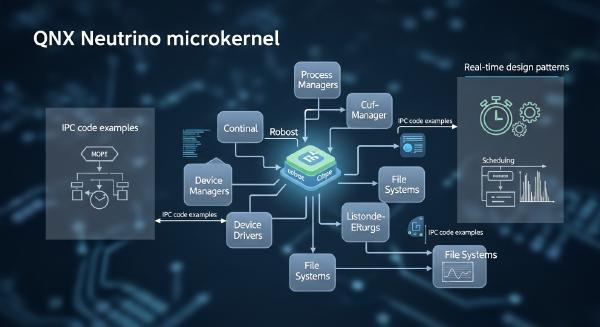
QNX 8.0’s microkernel architecture ensures that critical operations—such as emergency stops in robotics—execute with microsecond-level predictability, regardless of concurrent AI workloads. -
Mixed-Criticality Workloads
Developers can run:- Safety-certified control systems (ISO 26262, IEC 61508)
- High-performance AI models (vision, planning, inference)
on the same hardware without cross-interference.
-
Proven Medical-Grade Foundation
QNX is already deployed across the majority of leading medical device manufacturers. This integration enables those systems to adopt advanced AI capabilities while maintaining regulatory compliance.
This convergence eliminates the traditional need for separate safety and AI systems, reducing latency and system complexity.
🔄 From DRIVE to IGX: Expanding Beyond Automotive #
This announcement builds on the success of NVIDIA DRIVE Thor in autonomous vehicles. The IGX Thor platform extends that architecture into non-automotive domains.
Key Target Domains #
-
Humanoid & Mobile Robotics
Enables real-time perception and motion planning while guaranteeing safe human interaction. -
AI-Assisted Surgery
Supports ultra-low-latency video processing and decision support for precision medical procedures. -
Smart Industrial Systems
Consolidates PLCs, vision systems, and AI controllers into a unified, software-defined platform.
The shift is clear: autonomous system design is becoming cross-industry, not automotive-specific.
📊 Platform Comparison: Automotive vs Industrial AI #
| Feature | NVIDIA DRIVE Thor (Automotive) | NVIDIA IGX Thor (Industrial/Edge) |
|---|---|---|
| Primary OS | QNX OS for Safety 8.0 | QNX OS for Safety 8.0 |
| Safety Framework | DRIVE Safety | Halos Safety Stack |
| Core Use Case | L4/L5 Autonomous Driving | Robotics, Medical Devices, Industrial AI |
| Certification Focus | ISO 26262 (ASIL D) | IEC 61508 (SIL 3), IEC 60601 |
| Deployment Status | Production (2025–2026) | Early Access (2026) |
While both platforms share architectural DNA, IGX Thor is optimized for heterogeneous edge environments with stricter cross-domain safety requirements.
🔐 Why QNX 8.0 Is the Critical Enabler #
In today’s AI landscape, compute performance is abundant—but certified safety remains scarce. This is where QNX OS for Safety 8.0 becomes indispensable.
Key Advantages #
-
Scalability for Many-Core Systems
Designed for modern multi-core CPUs (e.g., ARM Neoverse), QNX 8.0 efficiently schedules workloads across dozens of cores without compromising determinism. -
Fault Isolation by Design
The microkernel ensures that failures in non-critical AI components do not propagate to safety-critical subsystems. -
Integration with NVIDIA Halos Safety Stack
The Halos stack acts as a supervisory safety layer. If an AI model fails or behaves unpredictably:- Safety-critical processes continue uninterrupted
- The system can transition to a safe state immediately
This architecture enables true coexistence of AI and functional safety, rather than loosely coupled systems.
🚀 From Experimental AI to Certified Autonomy #
The partnership between QNX and NVIDIA represents a broader industry transition:
- From AI experimentation → AI certification
- From isolated systems → unified safety platforms
- From best-effort AI → guaranteed-safe AI behavior
As QNX leadership has emphasized, safety is no longer optional—it is a first-class design requirement.
🧠 Final Insight #
The emergence of platforms like IGX Thor raises an important question:
Will safety-certified AI remain confined to high-end systems, or become ubiquitous?
Likely Trajectory #
-
Short Term (2026–2028)
Adoption concentrated in:- Surgical robots
- Medical imaging systems
- High-value industrial automation
-
Mid Term (2028–2032)
Cost reductions and ecosystem maturity may bring:- Safety-certified service robots
- Autonomous logistics systems
- Consumer-grade robotics with built-in safety guarantees
The key variable is cost vs. regulatory necessity. In domains where failure has human consequences, safety-certified AI will not be optional—it will be mandatory.